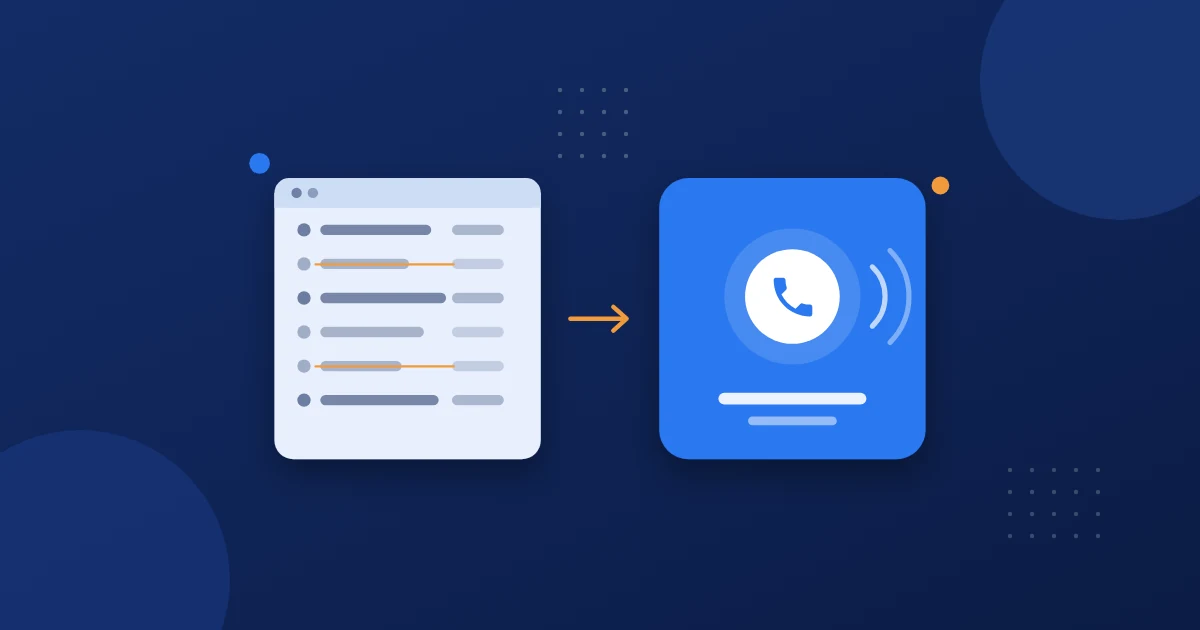
The difference in two sentences
With pay per lead, you pay for a record: a name, a phone number and sometimes an age or a state, usually from a form the person filled in. With pay per call, you pay for a phone call with a person who chose to dial. Both are sold to final expense agents, often by the same companies, and ads mix the words up all the time. Your bill tells you which one you bought. A row with a name and a date is a lead. A row with a call length, a recording and a charge is a call.
This page compares the two ways of buying, so you can pick the one that fits how you sell. How our own billing rule works, the buffer, is explained on pay-per-call final expense.
What you get for your money
Pay per lead
- A record you still have to reach, by phone, by text or at the door.
- Often sold to several agents at once, unless you pay more for an exclusive lead.
- A lower price per unit than a call.
- Charged when the record is delivered, whether or not the person ever answers.
Pay per call
- A live conversation with a person who dialed the number on an ad.
- At InboundHQ, sent to one agent and never resold.
- A higher price per unit than a lead.
- Charged only when the call meets the billing rule. Ours is the buffer: $70 for a TV call and $47 for a social call once connected time passes it, and $0 under it.
Where the work is
With a lead, reaching the person is your job. Someone has to dial the lead, often more than once, at the hours seniors pick up, from a number they are willing to answer. Speed matters too. A 2007 study of more than 15,000 web leads, run by the sales software company InsideSales.com with an MIT researcher, found that calling within 5 minutes instead of 30 made reaching the person about 100 times more likely. A shared lead turns that into a race with the other agents who bought it.
With a call, the ad did that part. The senior decided to pick up the phone before you were involved. Your work starts when the softphone rings: say your name and your state, ask one question, and quote. You do not need a dialer, a list or a callback schedule. You do need to be at the desk while calls are coming, because a call you do not answer goes to the next online agent.
Field agents and phone agents buy differently
Many field agents who sell final expense at the kitchen table build their week around direct mail leads. A senior mails back a reply card, and the agent sets appointments and drives a route. A lead suits that work, because the sale happens in person and the card is the reason for the visit.
Phone agents, often called telesales agents, quote and write the policy on the call. For them the expensive part is the dialing: hours of voicemail and wrong numbers between real conversations. An inbound call suits that desk, because the conversation starts the moment you answer. Selling by phone also means holding a license in every state you take callers from, and writing with carriers that accept applications over the phone. Our calls are built for agents who sell that way, with Chrome, a headset and a life license in each state they turn on.
Cost per lead vs cost per sale
Pay per lead nearly always wins on the price of one unit. That is not the number that pays your bills. The number that does is cost per sale: what you spent, fees included, divided by the policies you wrote. The method, step by step, is on what final expense leads and calls cost.
Three things move the cost per sale of a lead: how many records you never reach, how many other agents reached them first, and how many hours you spent dialing. On a call, the main things are how many calls pass the buffer and how many of those you close. With us, a short call that ends under the buffer costs $0, so it costs you a minute of time and no money.
Neither model promises a sale. A lead can turn into a great conversation once you reach the person. A billed call can still end without a sale. The fair test is a month of your own numbers from each, not a vendor's claim about someone else's results.
Consent and calling rules
When you dial a lead, you are placing an outbound call, and the rules for outbound calls are yours to follow. Under the federal Telephone Consumer Protection Act, telemarketing calls made with an autodialer or a prerecorded voice need the person's prior written consent. Sales calls are limited to 8am to 9pm in the person's time zone, and a number on the national Do Not Call registry can only be called with the person's permission or under another exception. Some states add stricter rules of their own. Ask the lead vendor for the consent record that comes with every lead, and keep it with the lead.
When the senior dials the number on our ad, the senior placed the call. Our compliance page explains how we treat that call, and why you should not call the person back on a different number without their consent on the recorded call. This isn't legal advice; talk to your compliance team or attorney.
When pay per lead makes sense
- You sell in person and need appointments, so a mailed reply card is the reason to visit.
- You already run a dialer, a team and a script built for outbound calling, and you track how many dials become conversations.
- You have more time than budget, and cheap aged leads are worth hours of dialing to you.
- You want a list you can work again next month.
When pay per call makes sense
- You sell over the phone and want conversations, not dials.
- You do not want to buy or run a dialer, a CRM or a calling list.
- You can sit at the desk during call hours and answer quickly.
- You want a short call to cost nothing. Ours is $0 under the buffer.
Some agents use both: leads for appointment days in the field and calls on phone days. If you do, track them separately so each one has its own cost per sale. Mixed together, a good month on one hides a bad month on the other.
Live transfers sit in between
A live transfer is a call, but someone talked to the caller before you did, and the vendor's rule decides when the bill starts. It sits closer to pay per call than to pay per lead, with a screener in the middle. We do not sell transfers. live transfers vs inbound calls sets the two side by side. If you are being offered anything called an inbound lead, read final expense inbound calls to check whether you would get the call or only the record.
Questions that tell you which one you are buying
- Do I get a record, or does my phone ring with a person on the line?
- If it is a record, how many other agents get the same one?
- If it is a call, what starts the charge, and what does a five-second call cost?
- Who talked to the person before I did?
- What consent comes with it, and can I see it?
- What do I pay every month on top of the leads or calls?
The longer checklist, with what to listen for in each answer, is questions to ask before buying final expense leads. Our TV product is final expense TV calls, and the streaming TV version is CTV final expense calls.
How our calls work, if you choose pay per call
A senior sees our ad on TV, streaming TV or social media and dials. The call rings one agent who is online and licensed in the caller's state, in a softphone in the browser. Calls come 9am to 8pm ET, Monday to Friday. TV calls are $70 and final expense social calls are $47 once connected time passes the buffer, and $0 under it. The price does not go up on a long call. The seat is $97 a month per agent, first 30 days free, and the first top-up is $350. How connected time is measured is in the buffer guidelines. Teams use final expense TV calls for agencies.
Every call is recorded, both sides, with a consent notice before the caller is connected. If a call that passed the buffer was the wrong product or the wrong state, you file a dispute from the call in your Call Center within 48 hours. A team member listens to the recording and replies in writing within one business day, and an approved dispute comes back as wallet credit.
To start, you answer a few questions, book a short call with our team, and fund the wallet with us on that call. If pay per call is the way you want to sell, apply for final expense calls. All of our final expense pages are listed on final expense calls.
Questions
What is the difference between pay per call and pay per lead?
Pay per lead charges you for a record you still have to reach. Pay per call charges you for a phone call with a person who dialed in, usually only once the call meets a billing rule.
Is pay per call more expensive than pay per lead?
Per unit, usually yes. Per sale, it depends on how many leads you never reach and what your time is worth. Compare a month of each on cost per sale. The method is on what final expense leads and calls cost.
Which is better for final expense telesales?
Many telesales agents prefer calls, because the conversation starts when they answer. Field agents who sell at the kitchen table often prefer direct mail leads for setting appointments.
Do I need a dialer for pay per call?
Not with us. You answer in a browser softphone with Chrome and a headset. Your cell phone never rings.
Are pay per call leads exclusive?
That depends on the vendor. Ours go to one agent and are never resold. Ask every vendor to put it in writing.
What is the 5 minute rule for leads?
It is the advice to call a new web lead within five minutes. A 2007 study by InsideSales.com with an MIT researcher found contact was about 100 times more likely at 5 minutes than at 30. An inbound call has nothing to chase, because the person is already on the line.
What does a short call cost?
With us, $0 if it ends before the buffer. Ask other vendors the same question, because some bill the moment the call connects.
Apply to take final expense calls
Two-minute application. Our team reads it and replies within one business day.