Which agents a call can ring
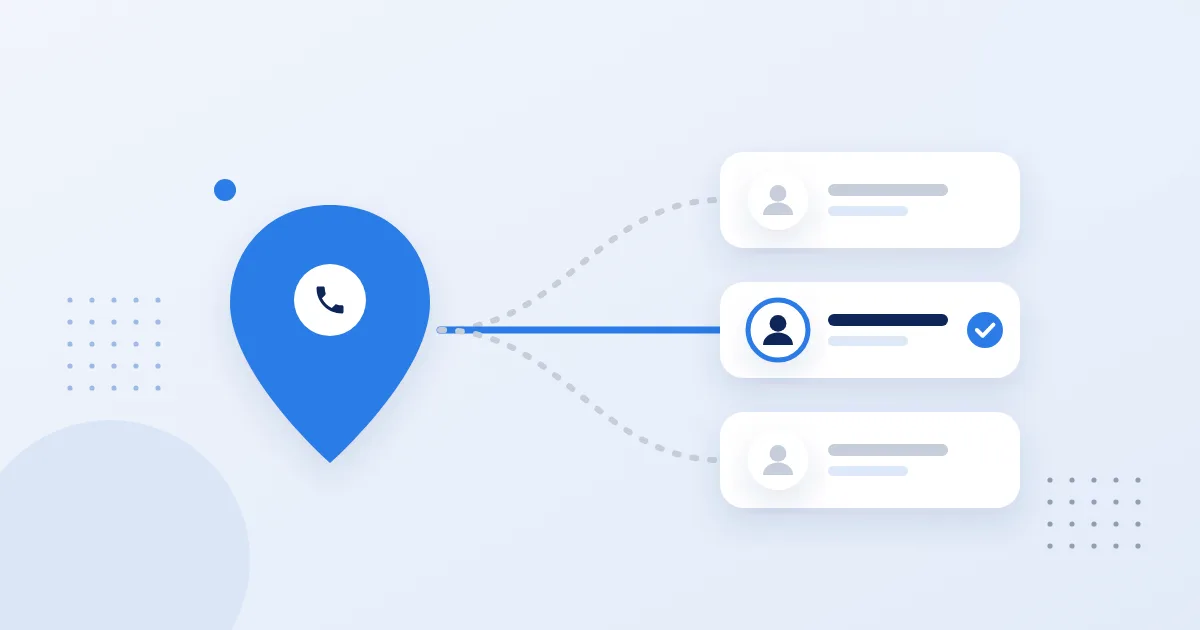
A senior sees a final expense ad on TV, streaming TV or social media and dials the number in the ad. Routing then looks for an agent who is online right now and holds a life license where the caller lives.
One of those agents gets the ring. The call rings in that agent's web browser, inside the portal. It is not shared with other agents and it is not resold. If that agent does not answer, the call moves after a few rings to the next agent who is online and licensed in that state. The agent who missed it is not billed. The guide on why answering final expense calls fast matters covers what a missed ring costs you.
Your states decide which callers you can be matched with, and your online switch decides when you can be matched at all.
Your states decide which callers can reach you
You can take calls from any state where you hold a life license, and you choose which of those states are on. A call from a state you have not turned on, or from a state where you are not licensed, will not ring you.
Turn on only the states where you hold a life license and can write the business. The caller was told a licensed agent in their state would pick up. You are not allowed to quote a product you are not licensed to sell in the caller's state, so leave any state you can't write turned off.
Your ID and your license are checked before your first top-up, so every caller reaches a licensed agent. Your licensed states are turned on when you go live. Each licensed state you turn on adds that state's callers to the calls that can ring you.
Calls only ring when you are online
Online means calls can ring you, and offline means they cannot. It is one switch in the portal. You can flip it whenever you like between 9am and 8pm ET, Monday to Friday.
While you are offline, routing skips you and looks for another agent who is online and licensed in the caller's state. When you switch back to online, calls can reach you again.
Turn calls on when you are ready to answer every ring, and off when you are not. The guide on answering fast has the checklist for getting ready and the reasons to go offline every time you leave the desk.
When calls come in
Calls come in from 9am to 8pm ET, Monday to Friday. You do not have to cover the whole window. Inside those hours you pick when you are online, and routing only considers you while you are.
If you work in another time zone, work out where 9am to 8pm ET falls on your clock before you plan your hours.
TV calls, social calls, or both
Two kinds of calls can ring you. TV calls come from people who saw a final expense ad on TV or streaming TV, and social calls come from people who saw the ad on social media. The pages on final expense TV calls and final expense social calls describe each caller, and CTV final expense calls covers the TV call when the ad runs on a streaming screen.
You can turn on either kind or both. They ring the same way in your browser, follow the same buffer rules and draw on the same wallet. Either way, the call rings an agent who is online and licensed in the caller's state. The buffer guidelines explain when a call becomes billable, and current prices for each kind are on the pricing page.
What else limits your calls
Once you are live, you can set a daily cap from settings. On an agency account, the owner can set daily caps for each agent.
Your wallet and your seat can also stop calls from reaching you, even when your states are on and your switch is set to online.
If your wallet runs low, calls pause until you top up. Keep enough in the wallet for the hours you plan to work, so calls don't stop halfway through your day. If your seat lapses, routing turns off. Your credits stay in the wallet as long as you sign in at least once every 30 days.
If calls stop and you are not sure why, look at your online switch, your states, your daily cap, your wallet and your seat.
On an agency account, the owner sets the limits
On an agency account, each agent has their own login, their own online switch and their own call log. Routing still rings one agent per call, and each agent needs a life license in every state they want calls from.
The owner controls who is in, which states are on and the daily caps for each agent. The owner also decides who approves top-ups and who answers disputes on the agency's side. The agency report shows calls, billable rate, spend and disputes per agent, so the owner can see who is answering and who is not.
The agency can fund one wallet for everyone, or one for each agent, and switch later. The guide to what a final expense agency owner sees covers the report, and the guide to running final expense calls for a team covers the wallet choice. The setup for agencies is on final expense TV calls for agencies.
What the caller knows because of routing
Routing only rings agents licensed where the caller lives, so the caller already knows the agent on the line is in their state. They also know the call is about final expense coverage and that a licensed agent will pick up. The guide to the first minute of a final expense inbound call covers how to open with that in mind.
When a caller is in a state you can't write
Sometimes a caller turns out to live in a state you are not licensed in. If the call ends under the buffer, it is never billed. If it reaches the buffer, it is billable, and wrong state is one of the reasons you can dispute it.
File the dispute from the call in your Call Center within 48 hours, with a short reason. A team member listens to the recording and replies in writing within one business day. An approved dispute comes back to your wallet as credit.
Do not quote a product you are not licensed for, and do not transfer the caller to anyone outside your agency. Both sides of every call are recorded, and the caller hears a consent notice before they reach you. This isn't legal advice; talk to your compliance team or attorney.
More guides for final expense agents
Every guide is listed on final expense calls. Once you know how a call finds you, read why answering final expense calls fast matters and the guide to the first minute of a call. If you run a team, start with the guides on what an agency owner sees and running calls for a team.
For the words callers use, read burial insurance, funeral insurance and final expense. To compare calls with leads and transfers, read where final expense agents get business, then final expense inbound calls, pay per call vs pay per lead and live transfers vs inbound calls. Billing rules are on pay-per-call final expense.
Before you fund any vendor, go through the questions to ask before buying final expense leads and the guide to what final expense leads and calls cost. When you are ready to take calls, apply for final expense calls.
Questions
How are final expense calls routed to agents?
Each call rings one agent who is online and holds a life license in the caller's state. It rings in that agent's web browser, inside the portal.
Will I get calls from states I'm not licensed in?
No. You only get calls from states where you hold a life license and have turned that state on.
How do I stop calls for a while?
Switch to offline. Calls cannot ring you until you switch back to online.
Can I take TV calls and social calls at the same time?
Yes. Turn on either or both. They ring the same way, follow the same buffer rules and draw on the same wallet.
Can I set a daily cap on final expense calls?
Yes. Set it from settings once you are live. On an agency account, the owner can set a daily cap for each agent.
Why did my calls stop coming?
Your online switch, your states, your daily cap, your wallet or your seat can each stop calls. Calls pause when the wallet runs low, and routing turns off when the seat lapses.
Who picks the states on an agency account?
The agency owner. The owner controls who is in, which states are on and the daily caps for each agent.
What if the caller lives in a state I'm not licensed in?
Calls under the buffer are never billed. If the call reached the buffer, file a dispute from the call in your Call Center within 48 hours.
Apply to take final expense calls
Two-minute application. Our team reads it and replies within one business day.