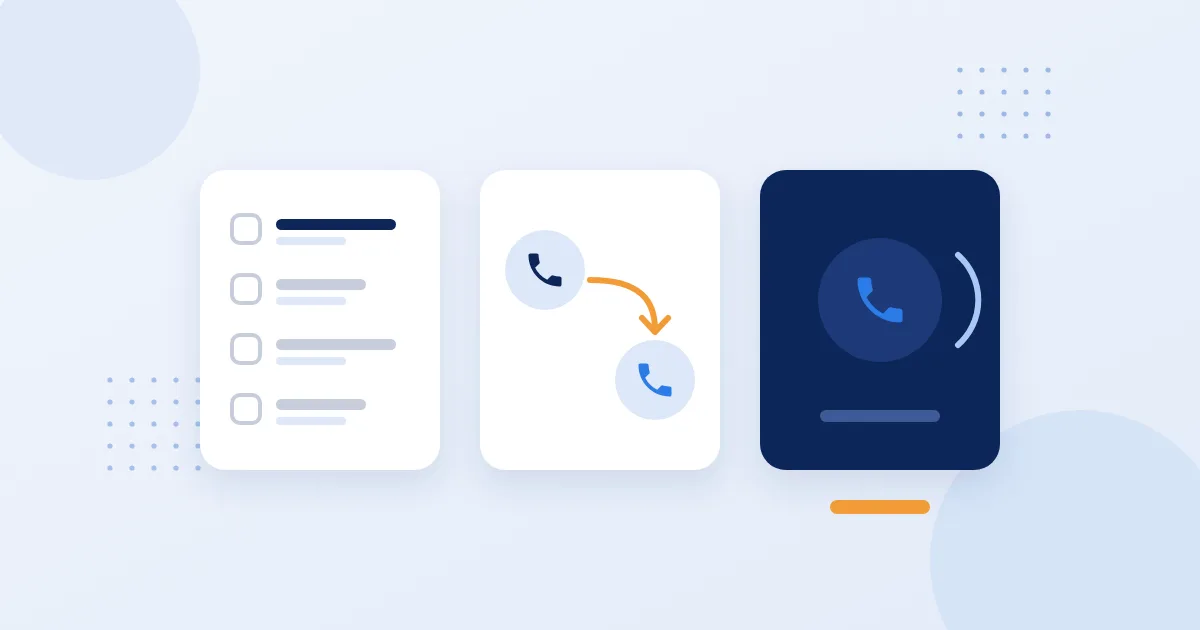
Three ways to buy final expense business
A lead is a record. You get a name and a phone number, sometimes an age or a state, and you still have to reach the person behind it.
A live transfer is a call where someone else talked to the caller first. A screener talks to the caller, checks a few answers, and then connects them to you.
An inbound call is a conversation the consumer started. Someone who wants to talk about burial or final expense coverage dials a number, and a licensed agent answers.
Ads mix these words up, but your bill tells a lead from a call. A row with a name and a date is a lead. A row with a call length, a recording and a charge is a call. A transfer shows up as a call too, so to tell a transfer from an inbound call, ask the vendor who talked to the caller before you.
InboundHQ sells inbound calls only, not leads or live transfers. This guide still covers all three, because agents shop all three and some use more than one.
What a lead is
Leads come in several kinds. The guide to what final expense leads and calls cost lists them:
- Shared leads, sold to more than one agent. You race the other buyers to the phone.
- Exclusive leads, sold to one agent only.
- Aged leads, weeks or months old. Many of those people have already talked to an agent or stopped answering.
- Direct mail leads, reply cards a senior filled in and mailed back. They arrive at the speed of the post.
You pay for a lead when the record is delivered, whether or not anyone ever answers. After that, reaching the senior is your job. Someone has to dial, often more than once, at the hours seniors pick up, from a number they are willing to answer. Working leads by phone can also mean paying for tools: a dialer, a CRM, phone numbers, and a service that checks numbers against the Do Not Call registry.
The InboundHQ pricing page says one hundred dials from a lead list give you about ten conversations. The rest are voicemail, wrong numbers and people who do not remember the form.
Watch the phrase "inbound final expense leads." It can mean a live call, or a record from an inbound campaign that you still have to dial. If you have to dial it, you bought a lead. The guide to final expense inbound calls explains the difference.
When leads are the right fit
Leads suit some ways of selling better than calls do. The guide to pay per call vs pay per lead names these cases:
- You sell in person at the kitchen table, and a mailed reply card is the reason for the visit.
- You already run a dialer, a team and a script built for outbound calling.
- You have more time than budget, and cheap aged leads are worth hours of dialing to you.
- You want a list you can work again next month.
Many field agents who sell at the kitchen table build their week around direct mail leads. A senior mails back a reply card, and the agent sets appointments and drives a route.
What a live transfer is
A live transfer starts somewhere other than your desk. A consumer calls a number, or a call center reaches the consumer, and a screener talks to them first. The screener may confirm age, state and interest in final expense coverage. When the answers match the filter, the screener connects the caller to you. You hear a beep or a short introduction, then the caller.
You are the second person on the call, sometimes the third. The caller may already have given their age and state, and may be tired of giving them again. A transfer can still be a good call. The vendor that ran the first leg set the filter, though, and it usually sets the billing rule too. Some transfers bill on connect, some after a number of seconds the vendor chose, and some only when the screener marks the caller qualified.
Ask a transfer vendor where the first leg of the call came from. If a call center dialed the senior first, you are buying a transfer, whatever the ad calls it. Some transfer floors also need a dialer or a hard phone, because the vendor's bridge expects one.
The guide to live transfers vs inbound calls compares the two, including what the first minute looks like on each.
What an inbound call is
With an inbound call, the consumer dialed. You are not working down a list or leaving voicemails and hoping for a callback.
At InboundHQ, the call starts with a final expense ad on TV, streaming TV or social media. A senior sees the ad and dials the number in it. The call rings one online agent who holds a life license in the caller's state, and it is not shared or resold. It rings in that agent's web browser, inside the portal. You are the first licensed agent on the call, and no screener introduces you. If you miss it, the call moves to the next online agent licensed in that state, and the miss is not billed. The pricing page says ten calls are ten conversations, and you pay only for the calls that reach the buffer.
You need Chrome, a headset, and a life license in each state you turn on. There is nothing to dial, but you do need to be at the desk while calls are on, because a call you do not answer goes to another agent. Calls come 9am to 8pm ET, Monday to Friday, and you choose the hours you take them.
Three pages describe the call itself. The page on final expense TV calls covers calls from ads on broadcast and streaming TV, CTV final expense calls explains why a streaming ad brings the same TV call, and final expense social calls covers callers who saw the ad in their feed. The guide to how final expense calls are routed to agents explains which agents a call can ring, and why answering final expense calls fast matters covers missed calls and being ready for every ring.
What starts the charge
Every lead, transfer and call is billed on an event. Find out which event before you look at the price. You will meet these five:
- Per record. You pay when the name is delivered.
- Per connect. You pay the moment the call connects, even if the caller hangs up two seconds later.
- Per duration. You pay once the call runs past a number of seconds the vendor picked.
- Per qualified transfer. You pay when a screener marks the caller qualified, using the vendor's own definition.
- Per buffer. You pay once connected time reaches a buffer you can see before you go online.
InboundHQ bills on the buffer. Connected time starts when you answer and ends at hangup. Ring time and hold time do not count, and a call that ends under the buffer costs nothing. The full rules are in the buffer guidelines, and the page on pay-per-call final expense compares the billing models.
To test any call or transfer offer, ask the vendor what a five-second call costs, and get the answer in writing.
Compare cost per sale
A lead nearly always costs less per unit than a call. Compare cost per sale instead, because it puts leads, transfers and calls on the same scale. To work it out:
- Add up one month of spend on leads, transfers or calls.
- Add the monthly fees: seat or platform, dialer, CRM, phone numbers.
- Count the policies you wrote from them in the same month.
- Divide the total by the number of policies.
- Compare the result with the commission on your average policy.
Neither leads nor calls promise a sale. A lead can turn into a great conversation once you reach the person. A billed call can still end without a sale. The fair test is a month of your own numbers from each.
Some agents use both: leads for appointment days in the field and calls on phone days. If you do, track them separately so each has its own cost per sale. If you mix them, a good month on one hides a bad month on the other.
This guide doesn't list prices. Current prices are on the pricing page.
Questions to ask any vendor
The same short list works for leads, transfers and calls:
- Do I get a record to dial, or a live call?
- How many other agents get the same one?
- Who talked to the caller before me?
- What starts the charge? On a call or a transfer, what does a five-second call cost?
- What monthly fees come on top?
- What can I dispute, how long do I have to file, and does someone listen to a recording?
The full list, with what to listen for in each answer, is in the guide to questions to ask before buying final expense leads. Get the answers in writing before you fund anything.
Calling rules for leads and for inbound calls
When you dial a lead, you place an outbound call, and the rules for outbound calls are yours to follow. Under the federal Telephone Consumer Protection Act, telemarketing calls made with an autodialer or a prerecorded voice need the consumer's prior written consent. A number on the national Do Not Call registry can only be called with the consumer's permission or under another exception. Ask the lead vendor for the consent record that comes with every lead, and keep it with the lead.
On an InboundHQ call, the senior placed the call by dialing the number in the ad. The InboundHQ compliance page explains how those calls are treated, and why you should not call the caller back on a different number without their consent on the recorded call. Checking any callback you do place against the registry is up to you. The compliance page describes InboundHQ calls only. This isn't legal advice; talk to your compliance team or attorney.
If inbound calls fit how you sell
Inbound calls suit agents who sell over the phone, write with carriers that accept applications by phone, and can be at the desk during call hours.
Before your first call, read the first minute of a final expense inbound call for what the caller knows and what to say first, and burial insurance, funeral insurance and final expense for the words callers use. If you run a team, read running final expense calls for a team for team wallets, what a final expense agency owner sees for what you see on each agent, and final expense TV calls for agencies.
A team member reads every application, and approval is within one business day. When you are ready, apply for final expense calls.
More guides for final expense agents
Every guide is listed on final expense calls.
For the calls themselves, read final expense TV calls, final expense social calls and CTV final expense calls. To compare ways of buying, read final expense inbound calls, pay per call vs pay per lead, live transfers vs inbound calls and pay-per-call final expense. Before you fund any vendor, go through the questions to ask before buying final expense leads and the guide to what final expense leads and calls cost.
For taking calls, read why answering final expense calls fast matters on missed calls and being ready, how final expense calls are routed to agents on which agents a call can ring, the first minute of a final expense inbound call on what the caller knows and what to say first, and burial insurance, funeral insurance and final expense on the words callers use. Agency owners should read what a final expense agency owner sees and running final expense calls for a team, which covers team wallets.
Questions
What is the difference between a final expense lead and an inbound call?
A lead is a record you still have to reach. On an inbound call, the caller dialed and is already on the line when you answer.
Is a live transfer the same as an inbound call?
No. On a transfer, a screener spoke to the caller first, and the vendor decides when the bill starts. To tell them apart, ask the vendor who talked to the caller before you. On an InboundHQ call, no screener comes first.
Which is better for final expense, leads or calls?
It depends on how you sell. Field agents who sell at the kitchen table often prefer direct mail leads. Phone agents often prefer calls, because the conversation starts when they answer.
How do I compare the cost of leads, transfers and calls?
Use cost per sale. Add one month of spend to the monthly fees, then divide by the policies you wrote from them.
Does InboundHQ sell final expense leads or live transfers?
No. InboundHQ sells inbound calls only. The caller dials the number in the ad, and you are the agent who answers.
Do I need a dialer for inbound final expense calls?
No. Calls ring in your web browser, inside the portal. You need Chrome and a headset, and no dialer or CRM.
Are inbound final expense calls shared with other agents?
Not at InboundHQ. Each call rings one agent and is never resold. Ask every vendor to put their answer in writing.
What does a five-second call cost?
Nothing at InboundHQ, because a call under the buffer is not billed. Ask other vendors the same question, because some bill the moment a call connects.
Apply to take final expense calls
Two-minute application. Our team reads it and replies within one business day.